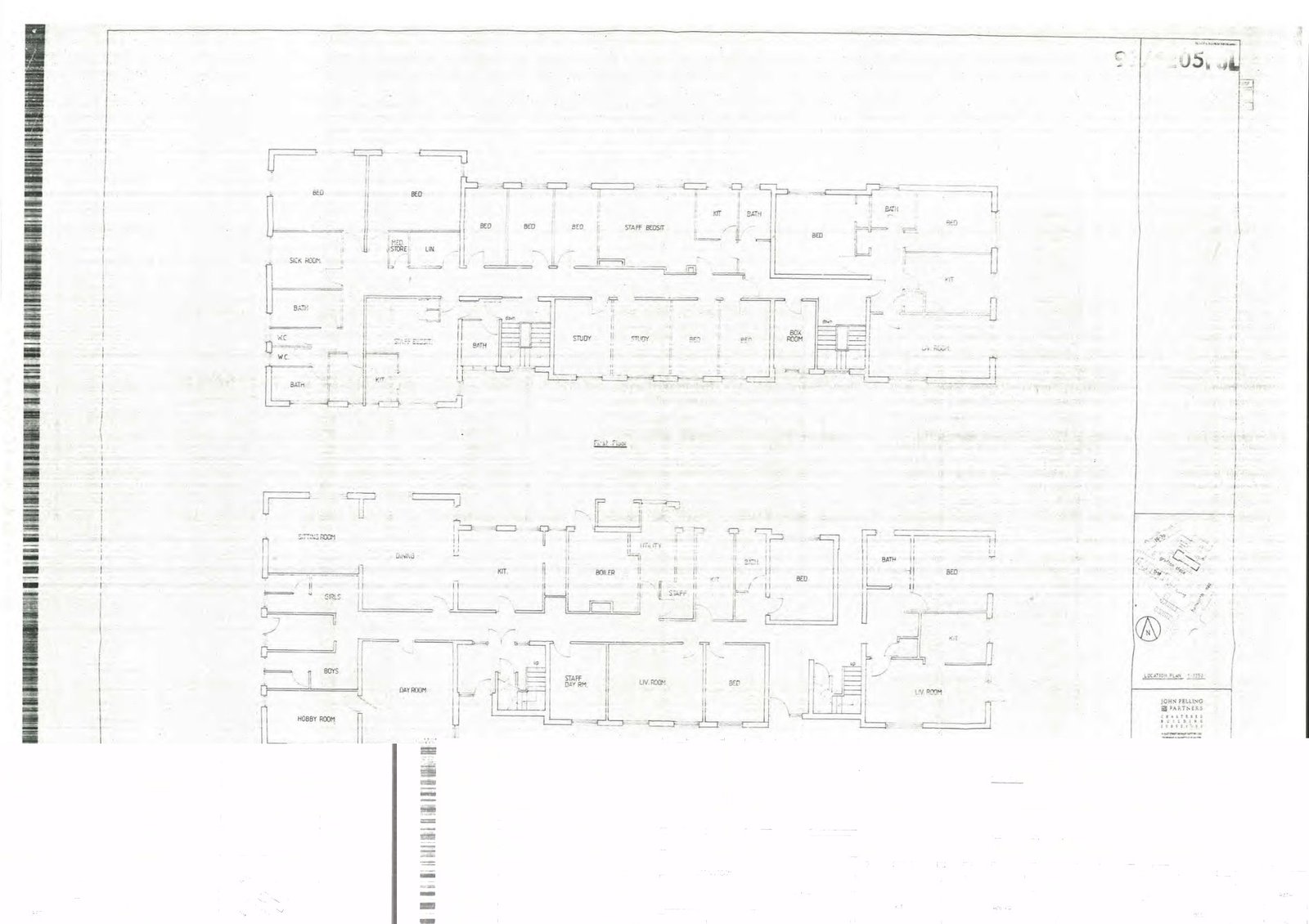
Original unannotated drawing
Source archive describes the drawing as belonging to a later period. It has not been established that this plan exactly reflects the home in 1984.

Historical buildings evidence · My recollection
I have placed the original drawing alongside my annotated copy to show what I remember about the main entrance, staff office, rear exit and the location where I recall a visitor standing. My annotations are my recollections, not architects’ labels.
Source archive describes the drawing as belonging to a later period. It has not been established that this plan exactly reflects the home in 1984.
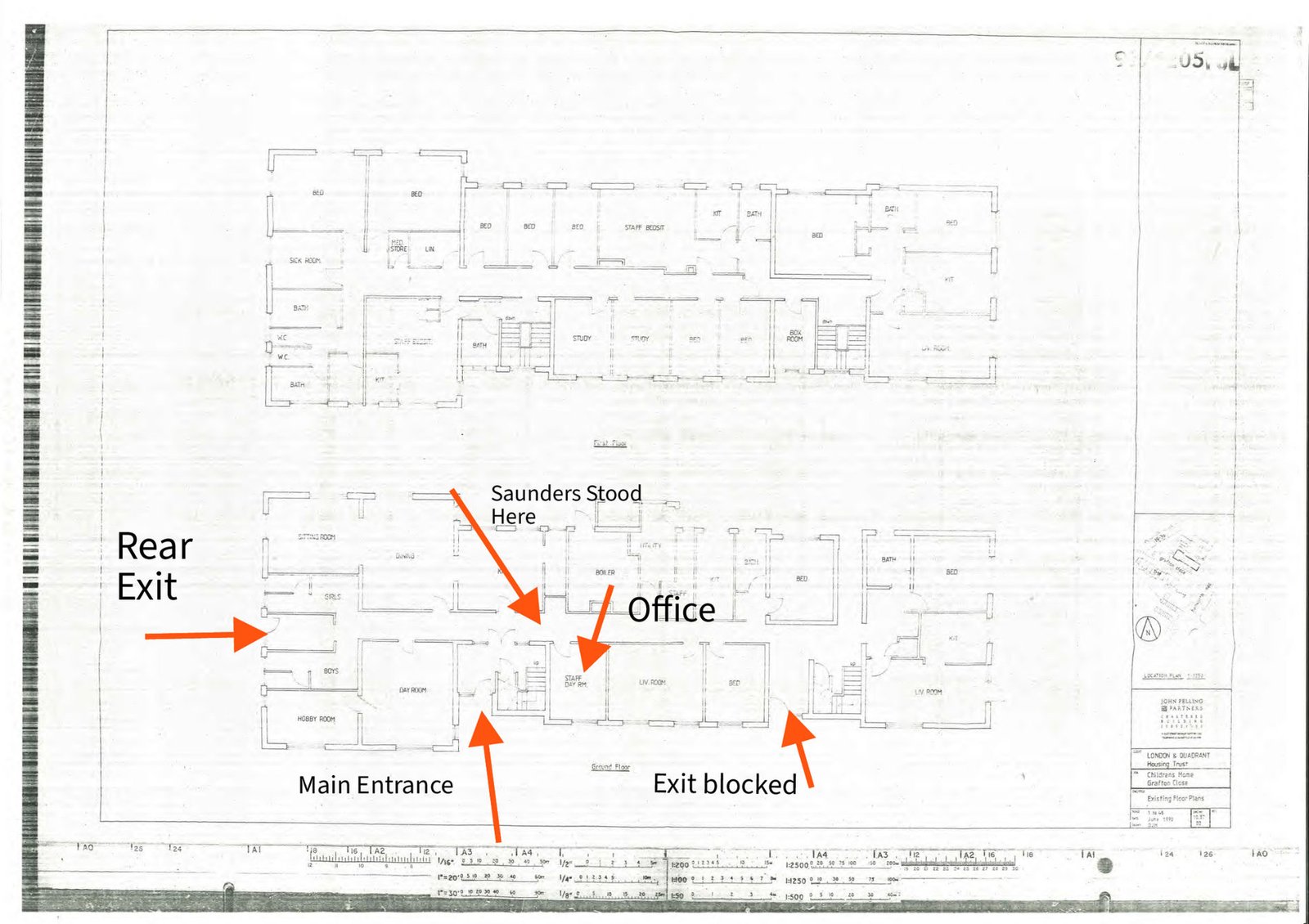
My markings identify where I remember the entrance, staff room, another exit and the visitor’s position. They are firsthand recollections, not proof of exact 1984 architectural conditions.
The questions are whether staff had clear sightlines from the office, what controls applied to visitors taking children off site and whether the layout changed between 1984 and the date of this drawing. The original plans and my annotations should not be mistaken for independent proof of an individual member of staff witnessing an event.
Building history · Planning decisions · 1990 and 1995
A planning-register extract headed “Former Childrens Home”, at Grafton Close, Heathfield, documents applications concerning the later use of the site. This is a record of planning decisions, not a record of who lived in the building.
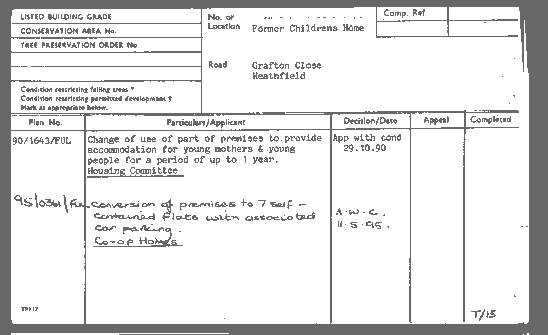
Application 90/1643/FUL records a proposed change of use of part of the premises to provide accommodation for young mothers and young people for periods of up to one year. The register gives “App with cond” dated 29 October 1990; the applicant/particulars column names the Housing Committee.
A later handwritten entry refers to converting the premises to seven self-contained flats with associated car parking and names Co-op Homes. Its decision column reads “A.W.C.” and is dated 11 May 1995. The handwritten application number should be confirmed against the underlying planning file.
These entries follow the period in which abuse at the former children’s home occurred. They justify asking whether the property’s history, its suitability for subsequent accommodation, and appropriate protection arrangements were considered when the building was proposed for use by young mothers and young people. The actual planning conditions, relevant housing management arrangements and any safeguarding assessment need to be located.
What the record does not establish: planning permission is not proof that the proposed use was implemented, that any particular young mother or child was accommodated there, that anyone suffered harm after the change of use, or that those making the 1990 decision knew about earlier offending. These are separate questions requiring contemporary sources. This later property-use issue must also be kept distinct from the assessment of Richmond’s safeguarding duties during my 1984 placement.
Richmond’s historical safeguarding responsibility ↗ · Research sources and evidential standards ↗