Personal historical evidence · Richmond Council · 1984

My Grafton Close records — recovered from Richmond Council.

My childhood care should have been documented. These are the surviving pages supplied from Richmond Council’s records: an original looked-after-children register, its admission-code key and the entry recording my admission on 21 September 1984.

I am publishing the identifiable parts of my own record so that the original evidence can be read alongside my account. Other children’s information remains hidden; the complete original documents stay in my private evidence archive.

What the surviving document actually records

A name, an admission date and a reason code.

21 September 1984Date of admission written against my name in the surviving register.
Code 10The corresponding printed historical key describes this as “Unsatisfactory home conditions”.
Original 1984 entryThis is contemporaneous administrative evidence, not a later reconstruction of what I remember.

Important source distinction: the cover’s handwritten dates, 1 April 1984–31 March 2001, describe the period covered by the register itself. They are not the dates of my individual care placement. The page shown here records an admission; it does not, by itself, establish my discharge date, every placement decision, or who was permitted to remove me from the home.

Images of original documents · privacy-protected public derivatives

Read the recovered records for yourself.

These are image reproductions of a redacted source held in my evidence archive. The document pictures are not illustrative stock photographs. Each can be opened at full size. I have applied additional permanent redactions on the entry page so that information about other residents cannot be recovered from the web image.

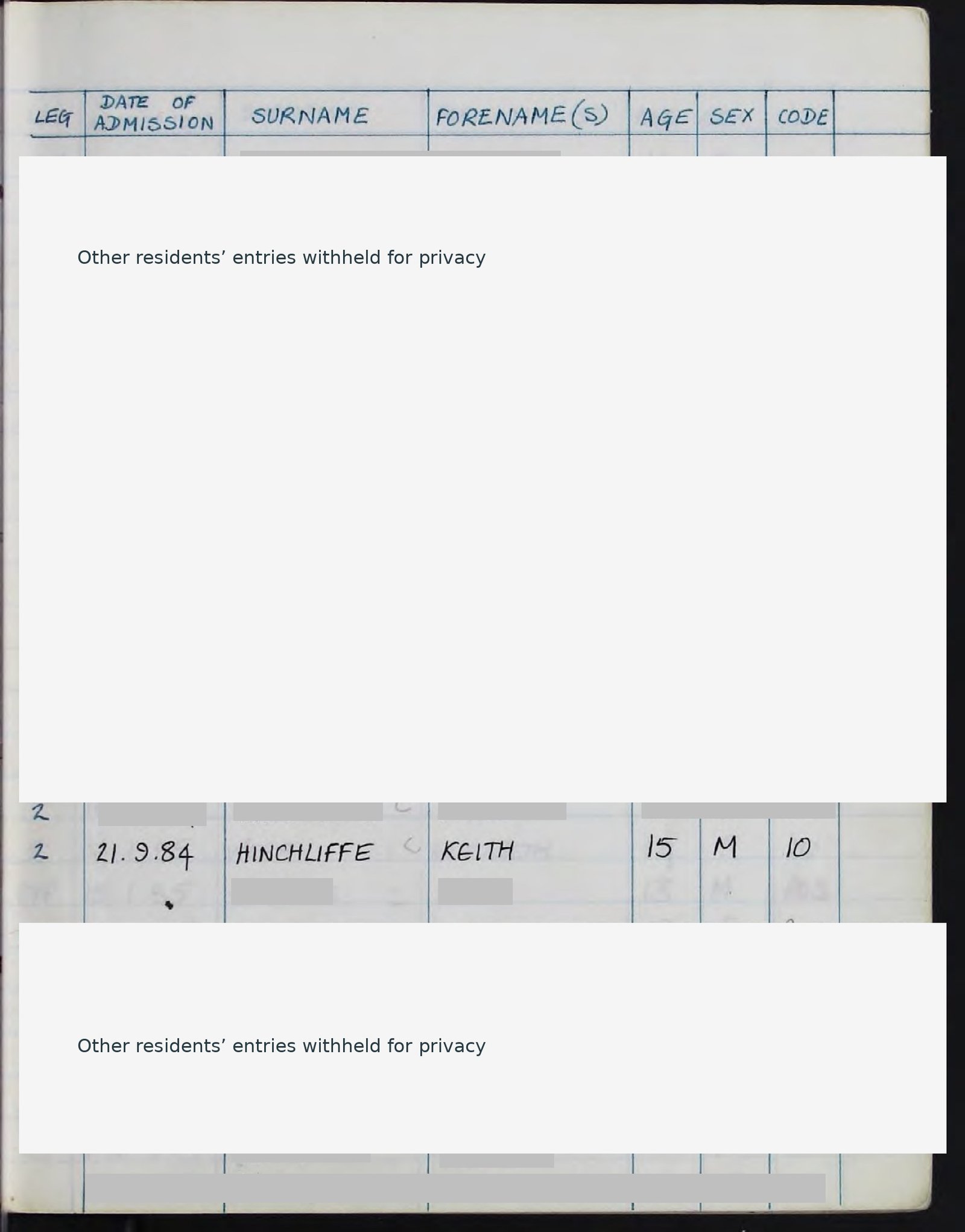
Surviving Richmond Council looked-after-child admission ledger with Keith Hinchliffe entered on 21 September 1984, age field 15, reason code 10; all other residents' entries obscured
Original ledger page (public redacted reproduction). My own 21 September 1984 row remains visible. The pale blocks hide other children’s entries and are additional editorial redactions. Enlarge the original entry image ↗

Exhibit A · Admission register

My name appears in the surviving 1984 register.

The handwritten entry reads HINCHLIFFE · KEITH, admission date 21.9.84 and reason code 10. The age column contains 15; that is what this historical register says, not an independent verification against every other age or date record.

What it establishes
There is a surviving contemporaneous administrative record of my admission in September 1984.
What it does not establish
It does not identify Saunders as a visitor, prove who authorised me to leave, identify the full staffing roster or demonstrate what safeguarding checks occurred.

Source: Richmond Council looked-after-child registry entry, redacted copy supplied in my case files. The image is flattened, so the concealed rows cannot be unmasked.

Original register reason-code key showing code 10 means Unsatisfactory home conditions
Original reason-code key. The printed key appears within the same three-page register source. Open full-size code key ↗

Exhibit B · Original administrative code key

Reason code 10: “Unsatisfactory home conditions”.

The accompanying register key identifies the meaning of reason code 10 as “Unsatisfactory home conditions”. That matters because it shows the category recorded on my admission—not merely my recollection decades later.

It is an administrative admission classification. It does not explain the full history of difficulties at home, what each social worker knew, what was investigated, or whether reasonable safeguarding measures followed. Those propositions need other evidence.

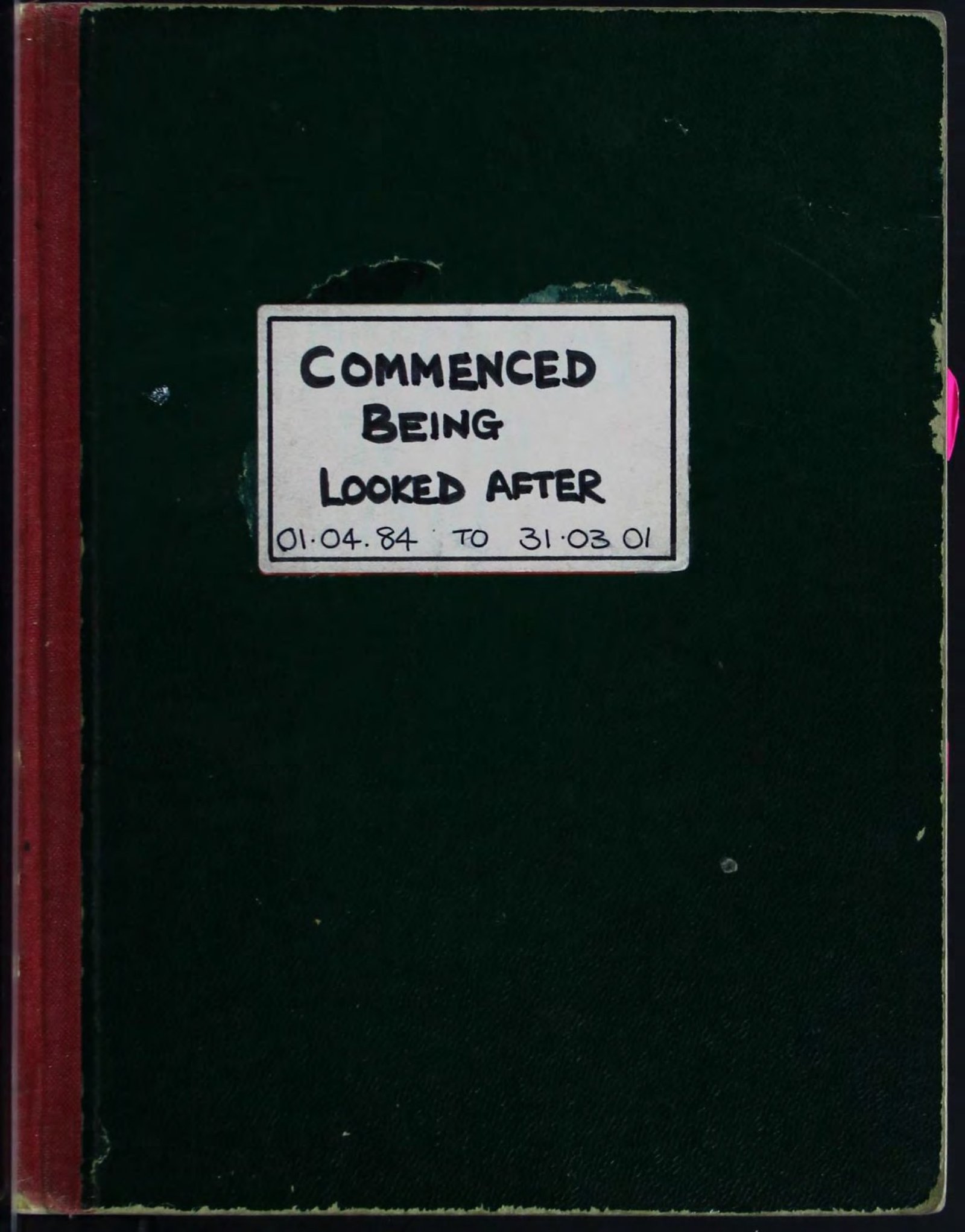
Original physical register cover marked Commenced Being Looked After, with book-wide dates 1 April 1984 to 31 March 2001
The physical register cover. The period written on it describes the book’s coverage, not how long I was personally in care. Enlarge cover ↗

Exhibit C · Original register cover

The wider register survived. My wider social-services file did not emerge with it.

This cover identifies the volume as a register of children who commenced being looked after. Its handwritten 1984–2001 dates belong to the register’s own record span. It does not show that I remained in care for that period.

The fact that this volume survives is important. It also makes it possible to ask which associated home, social-work, inspection and management records were maintained at the time, and which were retained or destroyed later.

8 January 2024 · Richmond Council’s stated records position

Where are the rest of my childhood records?

In a letter dated 8 January 2024, Browne Jacobson, writing for Richmond Council, said its client had been unable to locate my childhood social-services records. The solicitors suggested those records were likely to have been destroyed under the relevant retention policy. They said the information they could locate consisted of registers showing admission and discharge dates for Grafton Close.

Excerpt from Richmond Council solicitor letter stating the only information located was registers showing dates admitted and discharged from Grafton Close
Excerpt from Browne Jacobson’s letter, 8 January 2024. Only the records-position sentence is reproduced; surrounding personal correspondence details are omitted. Enlarge excerpt ↗

Exhibit D · Later solicitor correspondence

Registers located; wider files not located.

This is the Council’s solicitor’s explanation of the records position. It is not itself the original retention schedule, a destruction certificate, a completed archive search log or proof that records were deliberately removed.

What remains open is whether contemporaneous records might survive in other departments, repositories or series—including Grafton Close daily records, staff rotas, visitor permissions, social-work files, home inspection records, correspondence and council oversight papers.

The central distinction: “could not locate” is not the same as “never existed”; “likely destroyed” is not documentary proof of a destruction event. Equally, absence of documents on its own does not prove negligence or deliberate concealment. The original admission record is positive evidence that I was recorded in the looked-after system in 1984.

My case · Evidential significance

What these records contribute—and what they cannot answer alone.

I lived at Grafton Close in 1984. I have described Philip John Saunders visiting the home and taking me away. These surviving Council records provide independent historical documentation of my admission and the category entered at that point in my childhood. They do not replace my testimony, establish the home’s actual off-site visitor controls, or prove which staff saw what happened.

Questions raised by the surviving register

  1. Where are the source records behind the September 1984 admission and its “Unsatisfactory home conditions” classification?
  2. What is the full admission and discharge register series for Grafton Close, and is the discharge entry available for inspection?
  3. What placement plan, visitor policy, safeguarding assessment and record of permission applied when adults took children away from the home?
  4. Which contemporaneous staff, management and visiting-officer records were maintained, and what is the documentary history of any transfer or destruction?
  5. What searches have Richmond Council and the archive custodians actually completed, including any alternative departments or historic record series?

I want these documents read in their proper context: positive evidence where they prove something, unanswered questions where they do not.

Additional original source · September 1984

Richmond Council named as my care, finance and supervision authority.

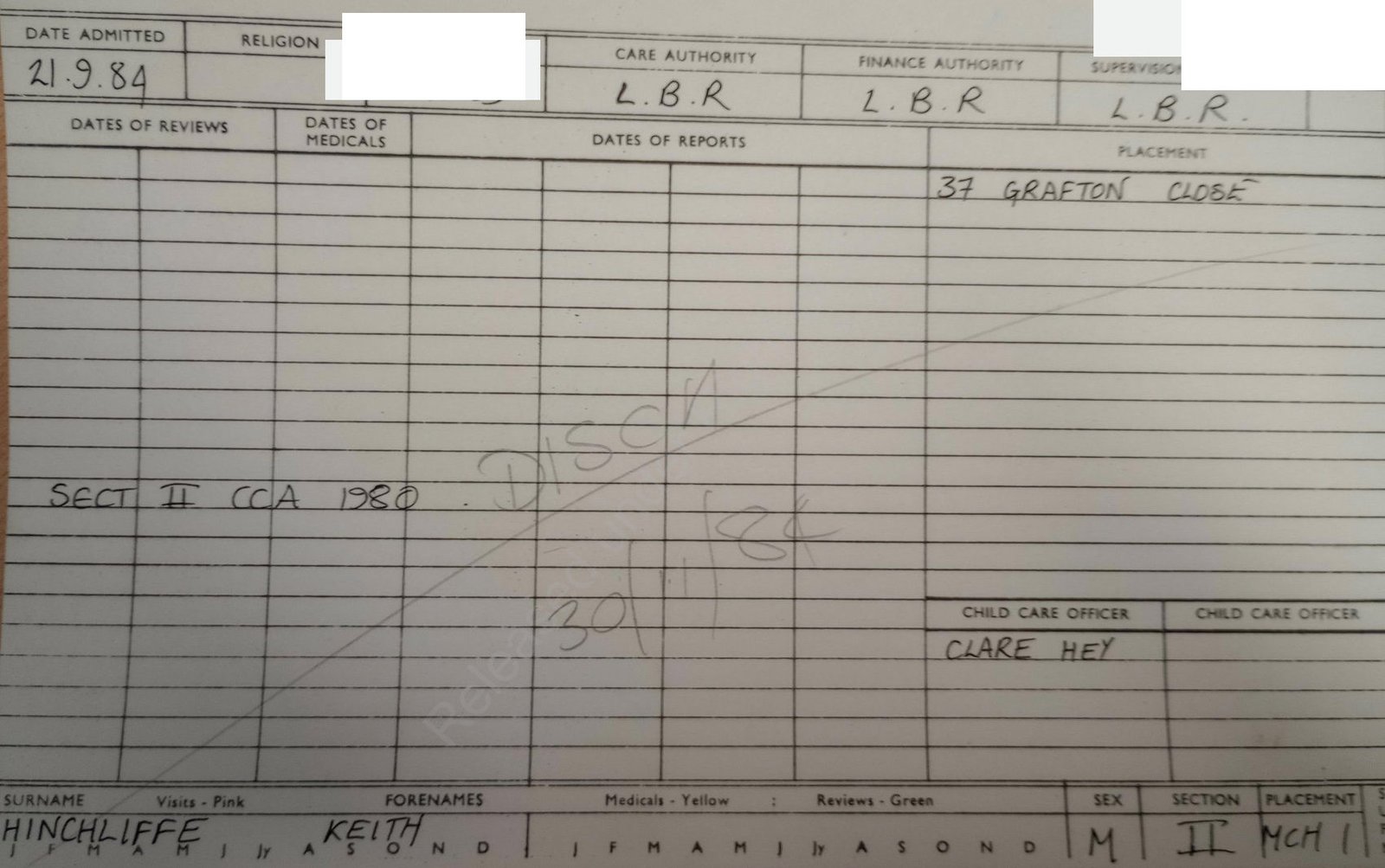
My 21 September 1984 Grafton Close care-authority record with private birth date and handwritten reference masked
Original administrative record, privacy-protected public image. Enlarge the record ↗

Exhibit E · Original personal placement record

The document names my placement and care officer.

My date of admission is written as 21.9.84, with the placement recorded as 37 Grafton Close. The care-authority, finance-authority and supervision-authority boxes each read L.B.R. The named child-care officer is Clare Hey. A handwritten reference to Section II, Child Care Act 1980 also appears.

The document records administrative responsibility, not what supervision was actually carried out. It contains no entries in the displayed medical, review or report-date fields, but that does not prove no such reviews or reports existed elsewhere. My full date of birth and the personal file reference have been masked in this web image.

It should be compared with the surviving admission register and the Council’s account of missing files, not treated as proof of the actions of an individual staff member.

Provenance, privacy and editorial method

Primary register: user-held file titled “K. Hinchliffe LAC Registry Entry Redacted”, three scanned pages. The displayed documents come from a redacted copy associated with Richmond Council’s disclosure. The unmodified original stays in a private evidence archive and is not publicly linked.

Document D: restricted extract from the 8 January 2024 Browne Jacobson correspondence on behalf of Richmond Council. The full letter has not been posted as a public attachment.

Privacy protection: other residents’ entries have been further obscured by permanent, opaque raster redactions on the display image; the web files do not contain the hidden underlying PDF layers. The full image can be enlarged without revealing other children’s names or details.

Source limits: this page identifies what documents record, what later Council representatives said, and what still needs original documents or independent corroboration. It does not portray missing files as proof of a cover-up or the historical admission code as a complete explanation of childhood safeguarding decisions.

Read the wider context in my Richmond safeguarding case, the Justice Timeline, and the editorial standards.

Related official records · 1980 and 1982

Two earlier Grafton Close logbooks have survived.

My recovered 1984 register entry and these earlier residential daily logbooks are different types of records. The official FOI-redacted 1980 and 1982 Grafton volumes are now available as 697 scanned pages, along with the 1998 archival storage form. They help establish earlier recordkeeping, but they do not fill the missing 1984 daily logbook.

Explore both historical day books ↗