Grafton Close · Newspaper and media archive

The headlines, the history, the evidence.

By Keith Hinchliffe · Grafton Close survivor and independent researcher

Explore the original newspaper cuttings, council recruitment advertisements, and reporting that document the history of Grafton Close, Richmond children’s services, and the long search for justice.

My case   ·   Earlier Grafton reporting   ·   Official record

Why this archive exists

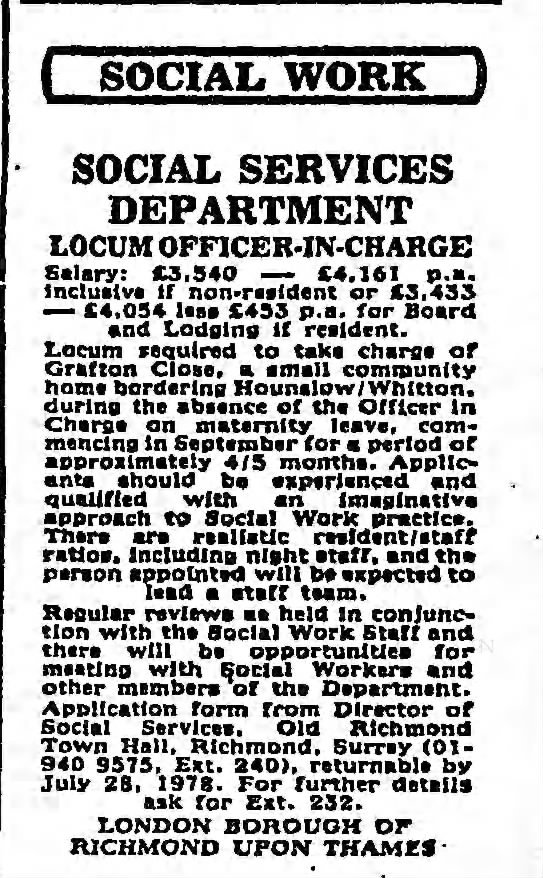
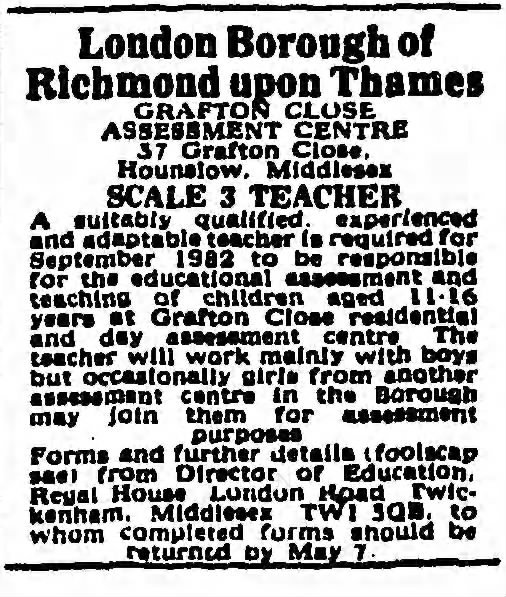
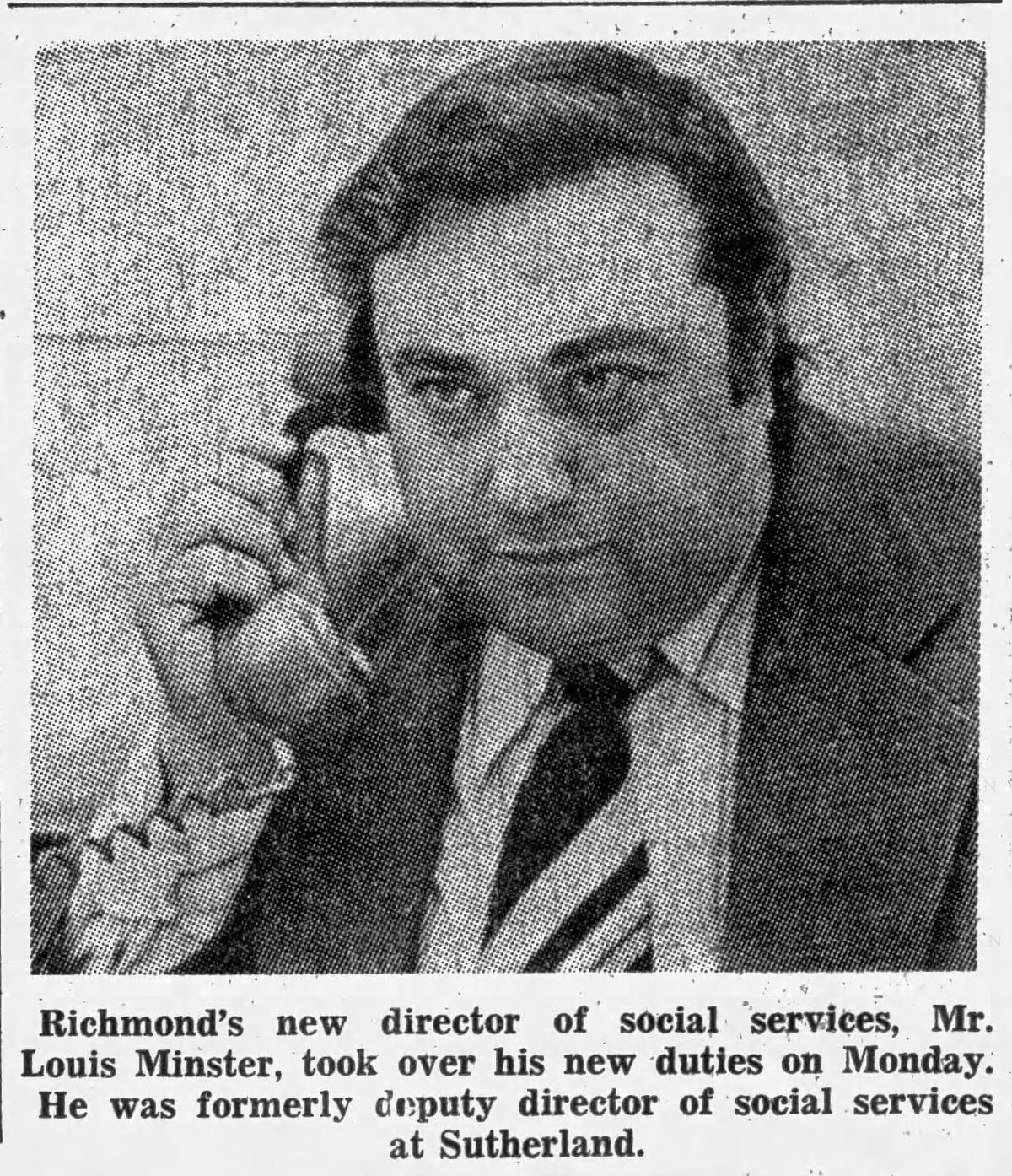
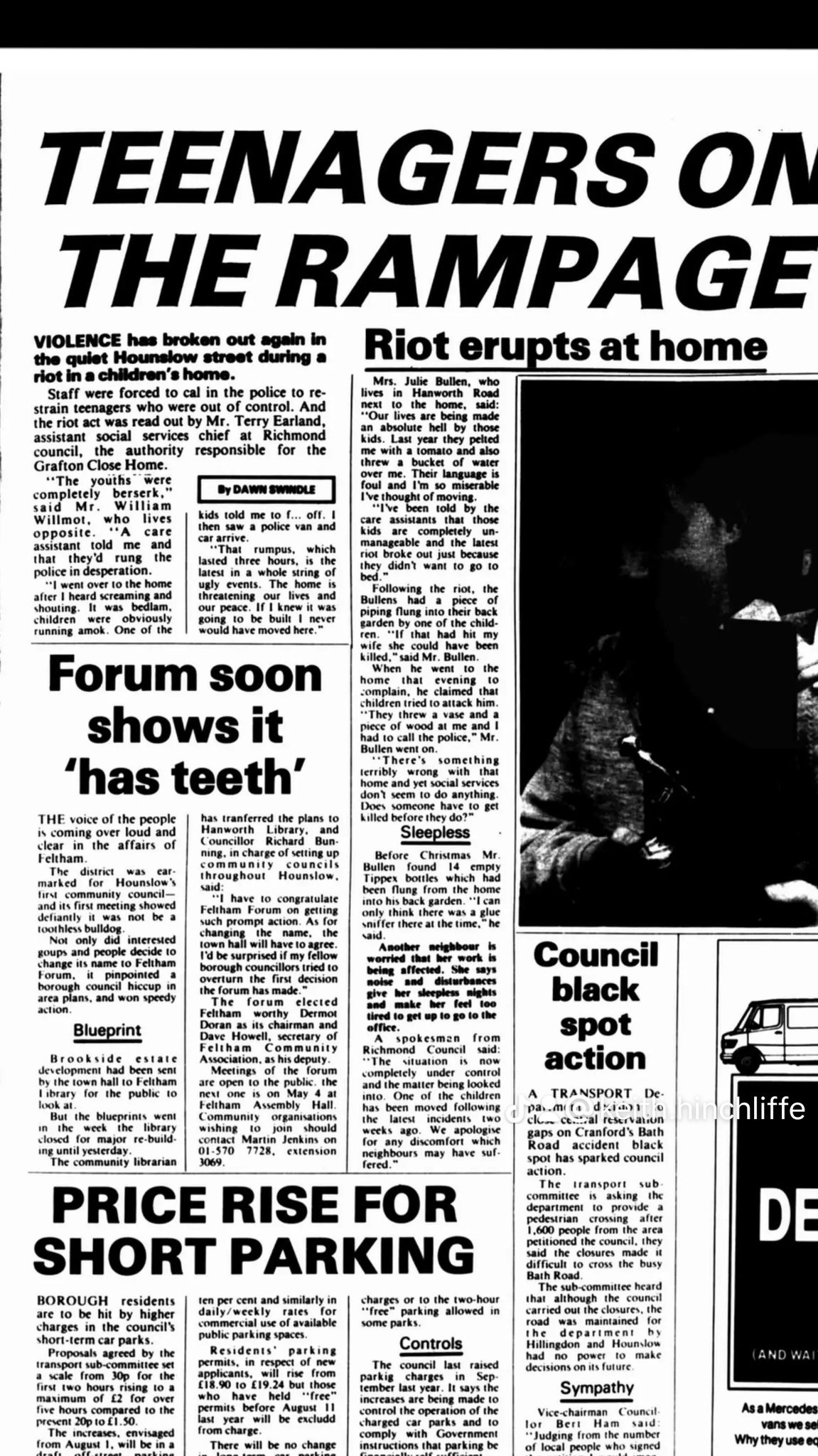
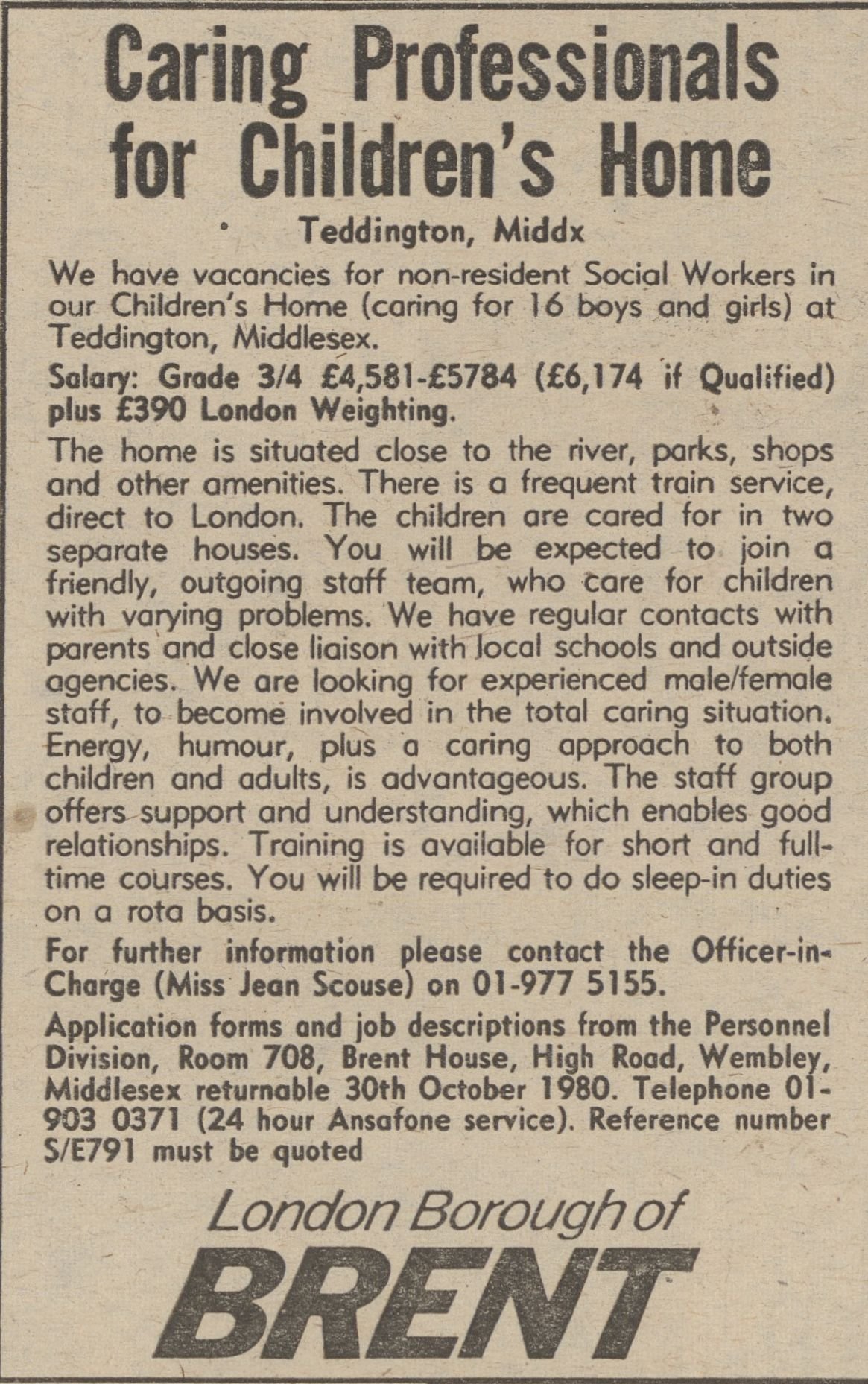
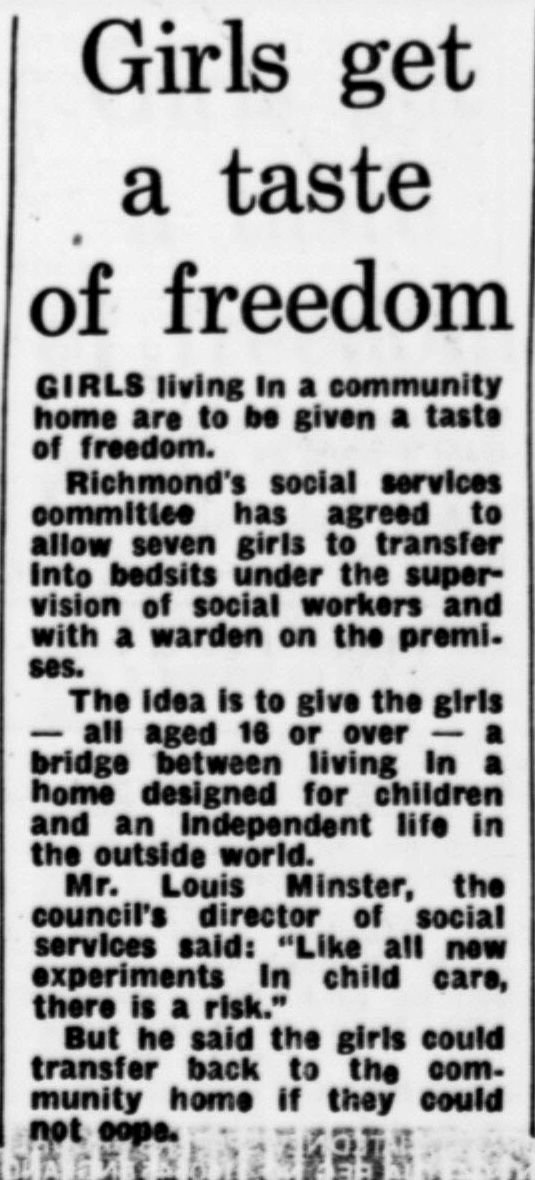
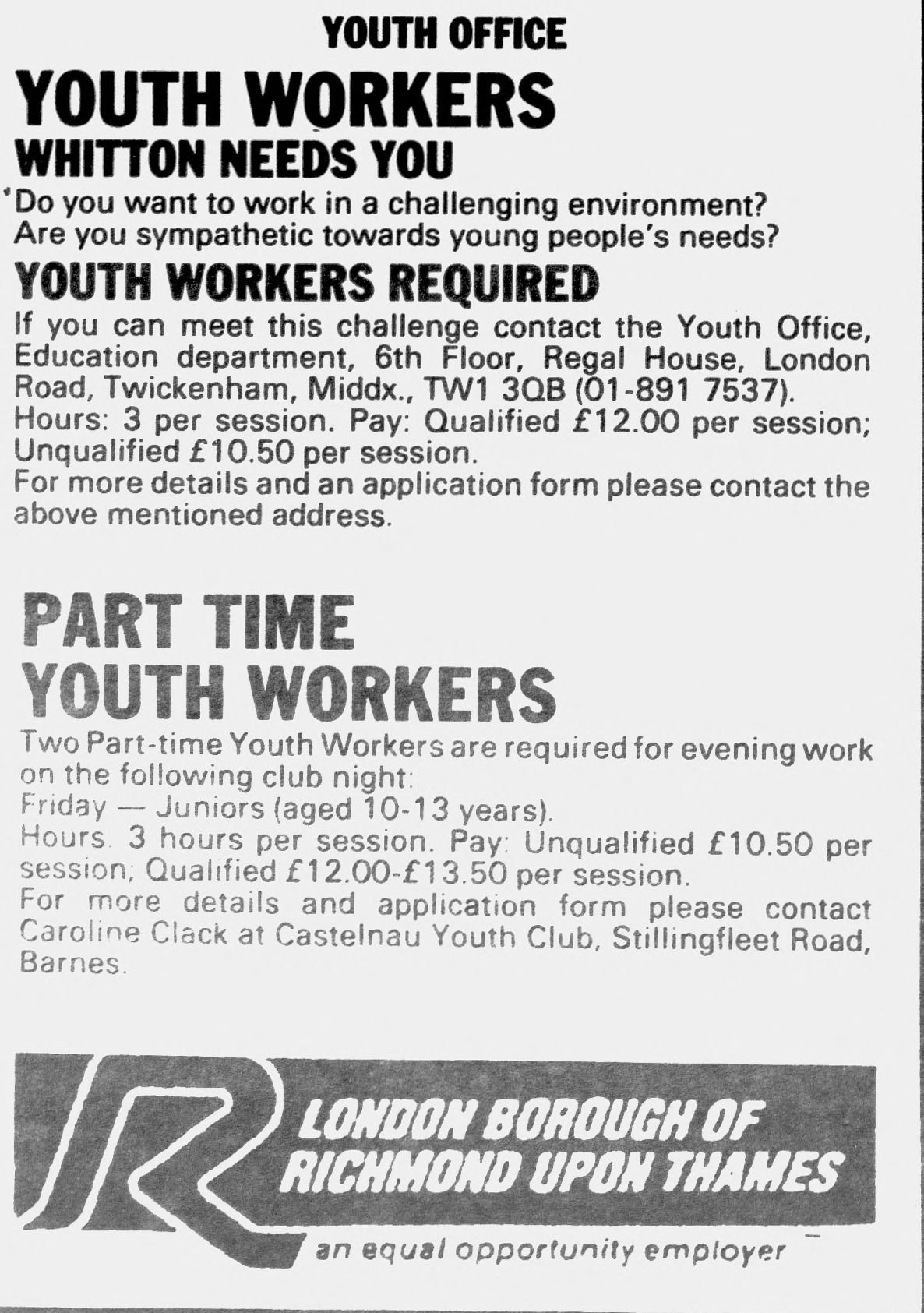
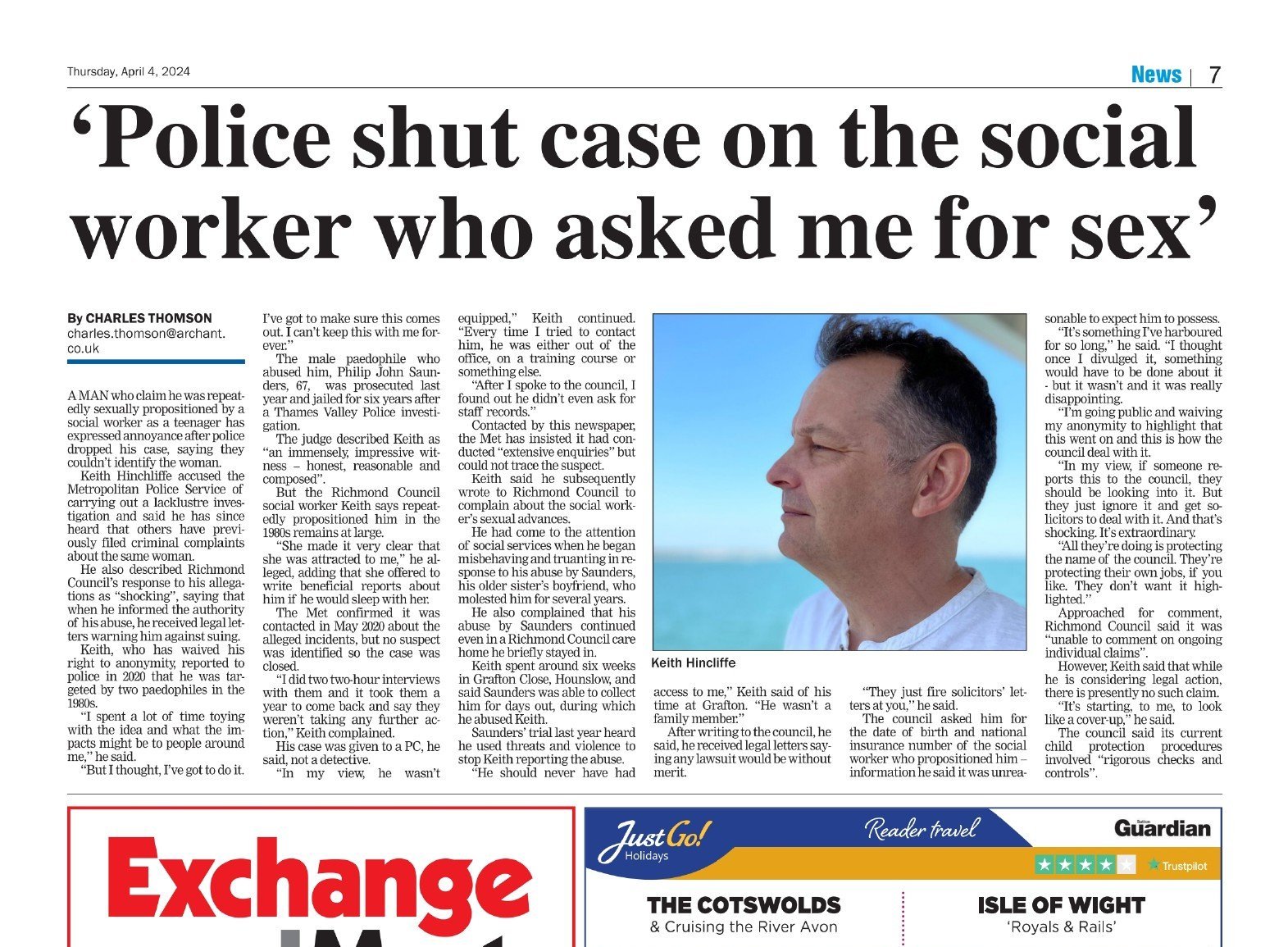
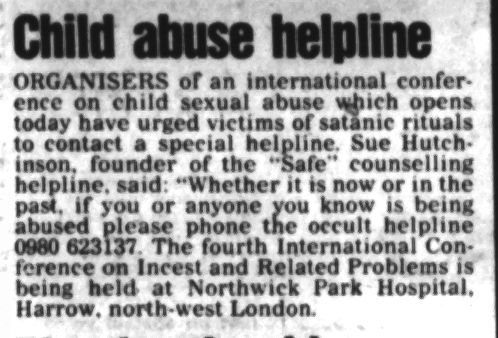
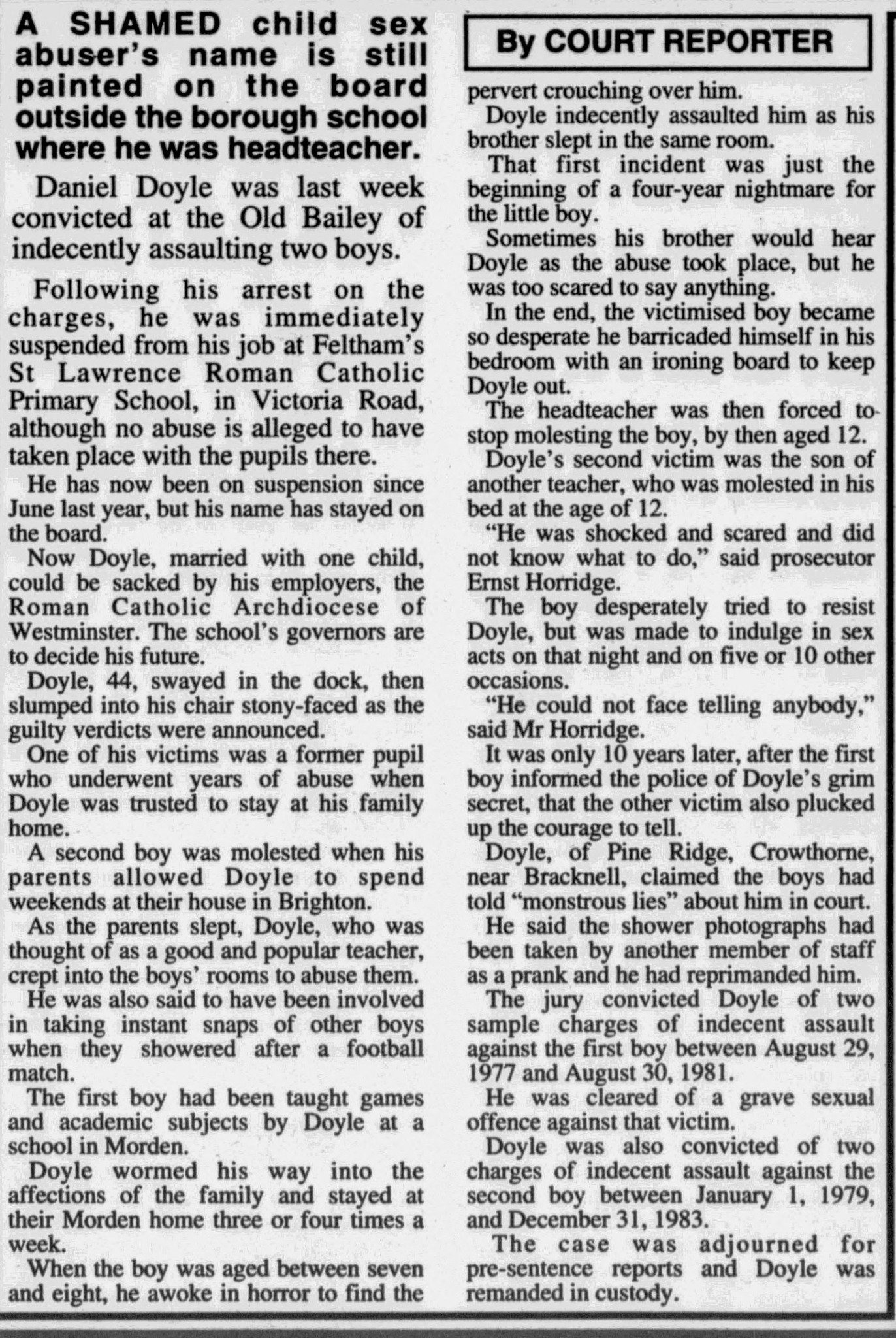
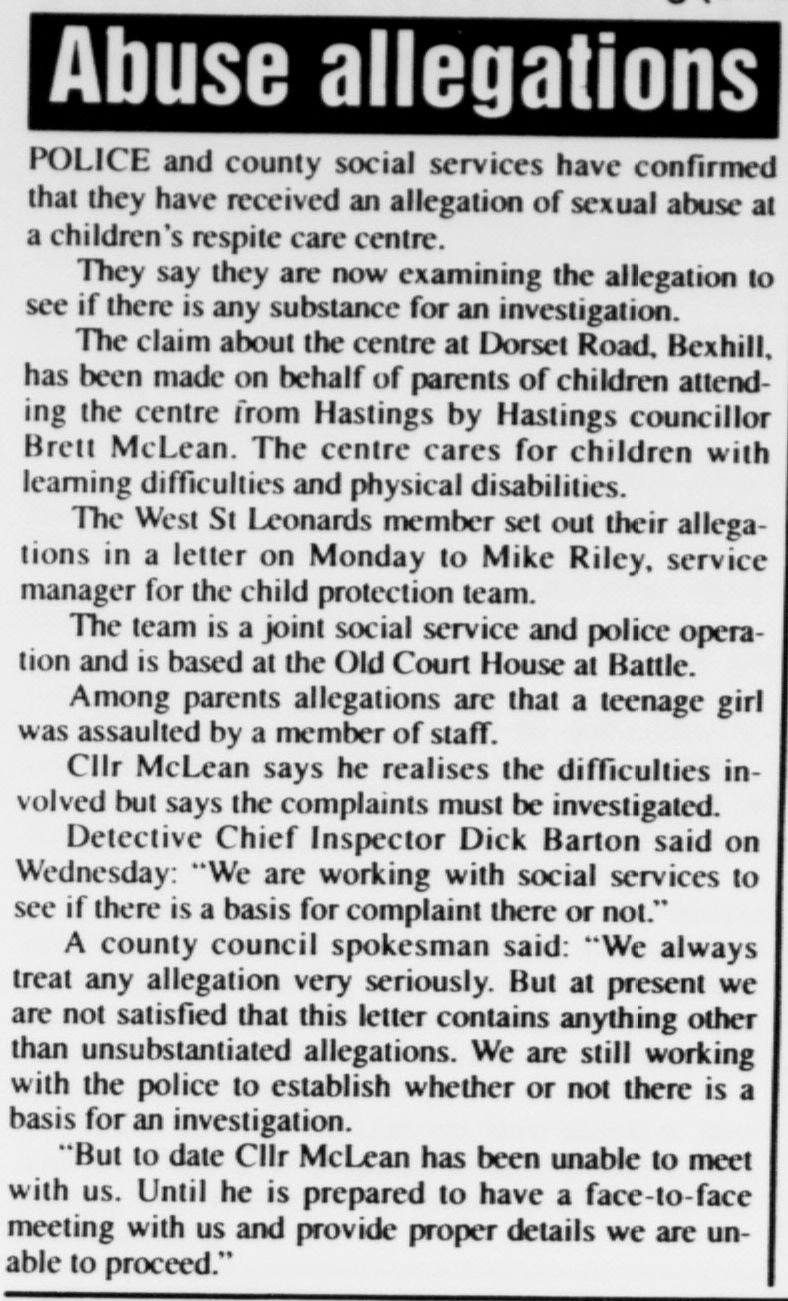
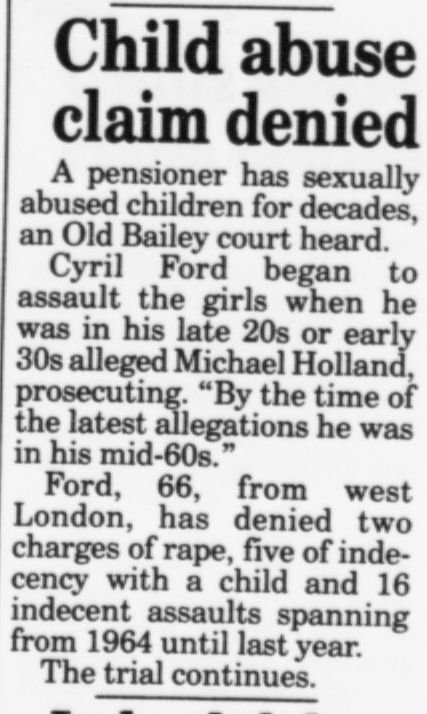
The archive brings the original printed sources into one place. Some cuttings describe how children’s homes recruited and organised staff; others report incidents, official statements, criminal proceedings and support for survivors. Each item is presented with its source, date, a clear description of its contents and the historical circumstances in which it appeared.

Original clipping images: Many entries below include a photograph of the original cutting or a redacted scan alongside its historical context. Select an image to view the full-size version where available. When the newspaper title or exact issue date is uncertain, that is stated alongside the item.

Grafton Close · A wider history of abuse

The story is bigger than Stingemore and McSweeney

Grafton Close’s history of abuse extends beyond the cases that became nationally known through Operation Fernbridge and the prosecution of Anthony McSweeney. The home operated across many years; children lived there at different times, and the abuse described in survivors’ accounts was not confined to two men or a single period. The better-known prosecution is one chapter in a much larger history.

Earlier survivor experience · precise year under review

Joseph Sabien

Joseph Sabien has publicly described his childhood in Richmond care, identifying Grafton Close as his children’s home and discussing the harm he experienced there. An earlier research estimate places these experiences around 1977, but that precise year is not independently established. His public account is an important earlier survivor perspective, separate from the later Stingemore–McSweeney prosecution.

In a separately published What Was Hidden biography, Joseph is independently identified as having lived at Grafton Close. The biography says he entered local-authority care aged seven and a half and remained in care until eighteen; those ages refer to his time in care as a whole, not confirmed Grafton Close admission or discharge dates. His first-person August 2026 account identifies the home directly. Neither source yet verifies the precise year 1977 or links his individual experience to any specific criminal proceeding.

1981 / early 1980s · Prior record

John Stingemore

John Stingemore was associated with the home until 1981. An earlier criminal-record extract retained in the research archive records his guilty plea to indecent assault of a 14-year-old boy at Grafton Close on or before 31 July 1981, and a two-year probation order. The extract is catalogued as approximately 1983; its precise court date awaits confirmation from the complete record. He was separately charged again in the 2013 investigation and died before the 2015 trial. Anthony McSweeney was convicted in 2015 of abuse committed in the 1979–81 period. 2015 trial reporting · 2015 conviction reporting.

1984 / 2023 · Separate offences and prosecution

My account and Philip Saunders

My own experience belongs to a later period. In 1984 I was placed at Grafton Close while Philip Saunders continued to abuse me; he was eventually prosecuted and imprisoned four decades later. My account also raises separate safeguarding concerns relating to a member of the home’s staff. These events cannot be reduced to the McSweeney and Stingemore story. Read my published interview.

Beyond the public cases

Survivors whose stories remain private

Some survivors have described their experiences publicly; others have spoken privately, and many may have chosen never to disclose. The number of publicly documented victims is not a count of everyone who experienced abuse at the home. Nobody should have to identify themselves publicly to be part of this history. The archive’s purpose is to tell the known stories accurately, preserve records and leave room for experiences that are not yet part of the public record.

For the original press material, see the 2013 charge report. The 2026 parliamentary answer refers specifically to Operation Fernbridge. Its scope is not a complete history of every abuse experience reported at Grafton Close.

Primary record exhibit · Separate from newspaper scans

John Stingemore: earlier guilty plea relating to Grafton Close

This original extract records an earlier guilty plea connected to Grafton Close. It concerns a different proceeding from the charges brought in 2013 and the later prosecution of Anthony McSweeney.

Original criminal-record image showing Charge 2: a Grafton Close indecent assault on a boy aged 14, a guilty plea and a two-year concurrent probation order
Facsimile of the original extract as retained in the research archive. Open the full image ↗. Existing redactions are retained.

What the extract records

Charge 2: On or before 31 July 1981, at Grafton Close, Hounslow, an indecent assault on a boy aged 14, contrary to section 15(1) of the Sexual Offences Act 1956.

Plea: G (guilty). Recorded result: two-year probation order, concurrent.

What the record does not establish

The date of the offence is not the conviction date. The archive’s approximate 1983 classification is provisional: the image does not state the exact court date. It is marked “Continued”, and the issuing record series, complete case papers and chain of custody remain to be checked.

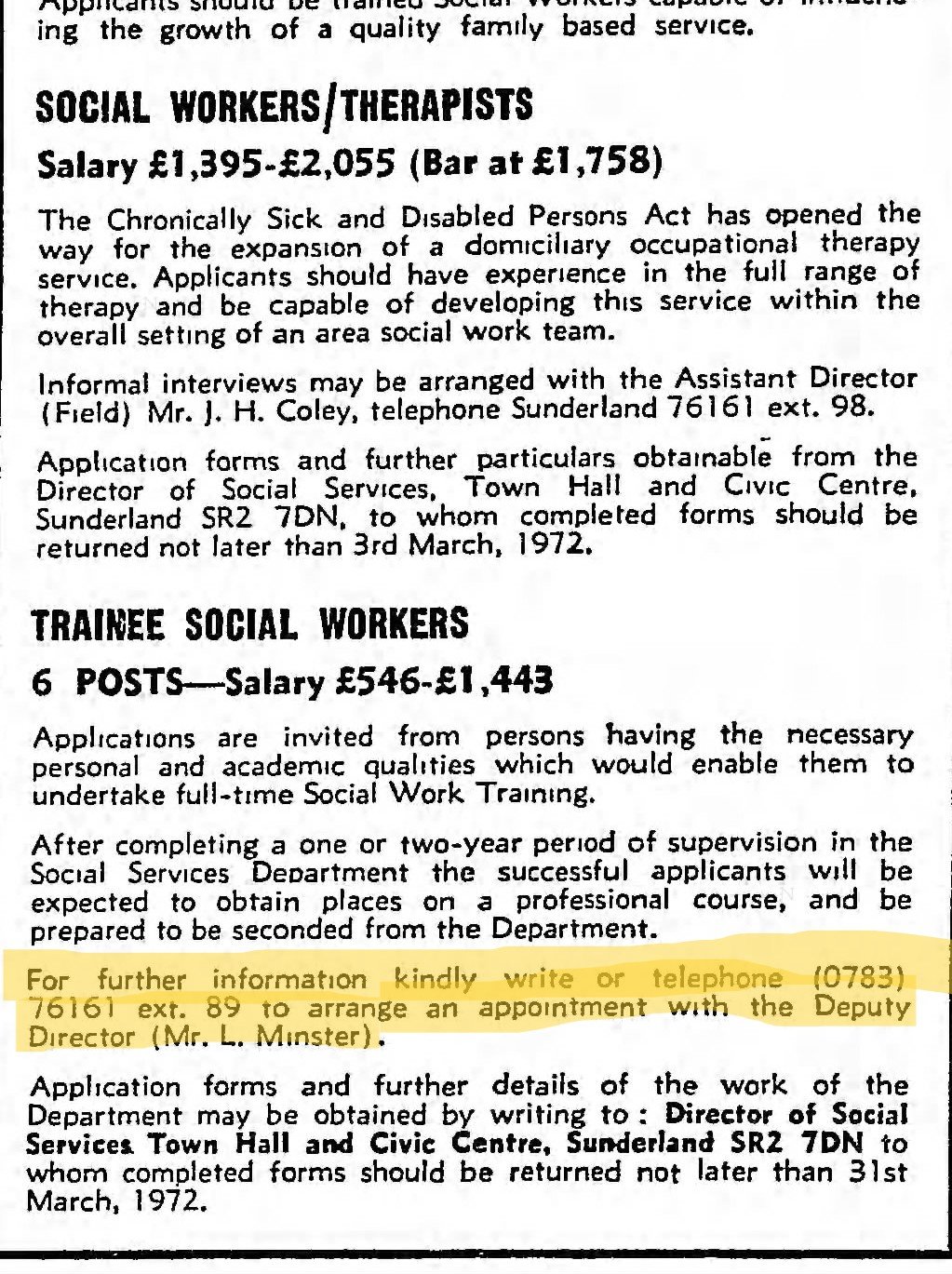
Richmond’s responsibility before 1984: John Stingemore held a senior management position at this Richmond-run children’s home during the 1979–81 abuse. A 27 March 2015 Evening Standard court report states that he was sacked in 1981 and that Anthony McSweeney’s visits to the home stopped abruptly. This earlier criminal-record extract also documents a guilty plea for a sexual offence at Grafton Close. Richmond’s management was responsible for the home’s staffing, supervision and protection of residents; recognising and responding to risk did not depend upon waiting for a criminal conviction.

The dismissal, the reported change in visitor access and the earlier guilty plea make the council’s institutional response a central evidential issue. Why was Stingemore sacked? Who investigated, authorised and recorded that decision? What was communicated to social-services leadership, and what changed for children subsequently placed at Grafton Close? The 2015 report does not establish the reason for dismissal, which is precisely why original personnel, management and safeguarding records matter. In its reported 2022 statement, Richmond acknowledged that the service leadership and management at the time of the crimes were unacceptable.

The original extract concerns a distinct earlier offence and guilty plea. It does not establish a wider conspiracy or decide the allegations brought in the later 2013 proceedings. View the chronology ↗

Further reporting — online articles

Below the original print gallery is a reading list of later reporting and official sources about the Grafton Close investigations, my case and Richmond’s response. Each entry links to the original article.

01 · First-person and court reporting

My case: Saunders, Thames Valley Police and Richmond

18 February 2024 · David Hencke · Westminster Confidential

Saunders jailed after survivor’s renewed pursuit of justice

Court reporting / my case

David Hencke's February 2024 report covers my pursuit of Philip John Saunders after offences dating back roughly four decades. It describes the Reading Crown Court prosecution, Saunders' seven convictions, and his six-year sentence. It also explains why I chose to waive anonymity and speak publicly about my experience.

The article brings together the criminal result and the questions that followed it: Saunders had been prosecuted, but the history of the child’s time in Richmond care and the response of the institutions involved still needed investigation.

Read the original article ↗
21 February 2024 · David Hencke · Westminster Confidential

My challenge to Richmond and the Metropolitan Police

Investigative commentary / my case

Published days after Hencke's report on the Saunders conviction, his follow-up turns to Richmond and the Metropolitan Police. It examines my complaints about another allegation associated with Grafton Close, the police explanation of the historical law, difficulties obtaining my childhood placement records and the Council's response to potential proceedings.

It is part of the public chronology showing how my search for answers continued after the Saunders trial, with a particular focus on accountability and access to official records.

Read the original article ↗
8 April 2026 · Locked Up Living · published interview transcript

Grafton Close survivor: the interview in my own words

First-person published testimony

In this April 2026 interview I explain, in my own words, what childhood abuse, his period at Grafton Close and the years afterward have meant. It contains a particularly detailed account of approaching Thames Valley Police, giving a lengthy video interview, being told that Saunders could not be located and carrying out his own research that helped reopen the inquiry.

The interview also examines the strain of repeatedly revisiting traumatic events, the difficulty of finding historic documents and the continuing work to establish how children were safeguarded in Richmond's care.

Read the original article ↗
02 · Other public investigations

Earlier reporting on Grafton Close

6 February 2013 · ITV News

Former youth worker discusses Elm Guest House allegations

Reporting of allegation / investigation

This ITV News report captures the early-2013 resurgence of public attention around allegations concerning Elm Guest House and Grafton Close. It records a former youth worker's comments as police enquiries and calls for investigation developed.

Read alongside the subsequent arrests and court proceedings, the article shows how previously little-publicised experiences of children in local residential care entered the national news agenda.

Read the original article ↗
7 February 2013 · The Independent · Martin Hickman

Arrests in Operation Fernbridge-related enquiries

Investigation-stage press report

Martin Hickman's February 2013 report for The Independent describes arrests made during police enquiries into historical child-abuse allegations connected with Grafton Close and the wider Elm Guest House reporting. It gives the contemporary public account of the investigation at the point arrests were announced.

It is an early marker in the chronology that eventually led to formal charges and later separate court proceedings.

Read the original article ↗
16 February 2015 · ITV News London · Ronke Phillips

The McSweeney trial begins at Southwark Crown Court

Court hearing / prosecution case

This ITV London court report covers the opening of the 2015 prosecution of Father Anthony McSweeney, relating in part to alleged abuse of a child associated with Grafton Close. It explains the case being put before the jury and the history of police enquiries into the home.

It is best read chronologically with the subsequent verdict report: this instalment describes the start of the trial and the allegations the court was asked to consider.

Read the original article ↗
27 February 2015 · ITV News · court verdict report

McSweeney found guilty of historic child sexual abuse

Court verdict

ITV's February 2015 verdict report records Anthony McSweeney's conviction in the historical child-abuse case linked to Grafton Close, together with the outcome of the other counts considered in the trial. The article takes the press chronology from investigation and arrest through to a jury verdict.

That result is one of the most important established events in the modern public history of Grafton Close.

Read the original article ↗
27 April 2017 · David Hencke · Byline

How historic offending at Grafton Close reached a conviction

Retrospective investigative journalism

David Hencke's April 2017 retrospective revisits Anthony McSweeney's conviction and asks how the offending, investigations and institutional responses developed over time. It draws attention to questions surrounding safeguarding oversight and how concerns about children were handled.

The significance of the report is its institutional focus: the story moves beyond the trial itself to the organisations responsible for children and the documentary history of their responses.

Read the original article ↗
7 November 2018 · David Hencke · Byline

What was investigated, and what was not?

Investigation commentary

Hencke's November 2018 piece considers the scope of historical investigations and the public inquiry into child sexual abuse, including the handling of Elm Guest House and Grafton Close matters. It reflects a period when survivors, campaigners and journalists were asking whether formal investigations had examined the full history.

The article is valuable as a record of the questions being posed about police operations, institutional scrutiny and the boundaries of the public inquiry.

Read the original article ↗
03 · Official records are not press clippings

What the government recorded

29 April 2026 · UK Parliament · Home Office written answer

Government confirms Fernbridge closed

Official parliamentary record

This April 2026 Home Office written answer gives the government's official parliamentary account of Operation Fernbridge. It states that the operation had closed and records a conviction for sexual assault of a child associated with Grafton Close.

It belongs alongside the news articles because it offers a dated ministerial statement on the operation's final status, rather than a journalist's retrospective account.

Read the original article ↗
05 · Public reporting and Richmond’s stated position

How institutional concerns entered the public record

18 October 2022 · Brentford Nub News · Megan Stanley

David Harris’s account and Richmond’s response

Survivor account with council statement

The October 2022 Brentford Nub News report presents David Harris's personal account of abuse connected with Grafton Close and the long process of seeking compensation. The article also includes Richmond Council's response, expressing regret about children abused in its care and acknowledging serious deficiencies in historical service leadership and management.

Bringing my account and the Council's public response together makes this one of the key articles for understanding the wider institutional history of Grafton Close.

Read the original article ↗
5 October 2014 (print) · 7 October 2014 (online) · Jurgen Balzan · MaltaToday

Richmond children’s homes: Grafton Close, Rodney Road and Teddington Park

Historical reporting · Council leadership and complaints

An October 2014 MaltaToday investigation names Grafton Close, Rodney Road and Teddington Park in reporting on historical abuse allegations involving Richmond Council children’s homes. It recounts former head of children’s services Terry Earland’s account of receiving complaints from children and referring concerns to the police and council staff.

The report also examines what former director of social services Louis Minster was told. In a further interview published on 28 October 2014, Minster said Earland informed him of police enquiries in 1982; he denied involvement in a cover-up. These published accounts are relevant to establishing when concerns reached senior management and what follow-up was recorded.

6 March 2013 · David Hencke / Westminster Confidential

Terry Earland’s reported briefings

Attributed testimony in journalism

In March 2013, David Hencke reported statements attributed to Terry Earland, a former senior Richmond children's-services officer. The article concerns information and briefings about child-abuse issues said to have been raised with senior council figures and elected representatives.

The piece is useful for following the history of how Grafton Close and other children's-services concerns reached institutional leadership, and for identifying the names and records that could help explain the Council's response.

Read the original article ↗